Ticketmaster's Favourite Customer: The Scalper
What does the DOJ’s Live Nation antitrust settlement actually change for fans and artists? Not much.

The $250 Ticket That Started This Rabbit Hole
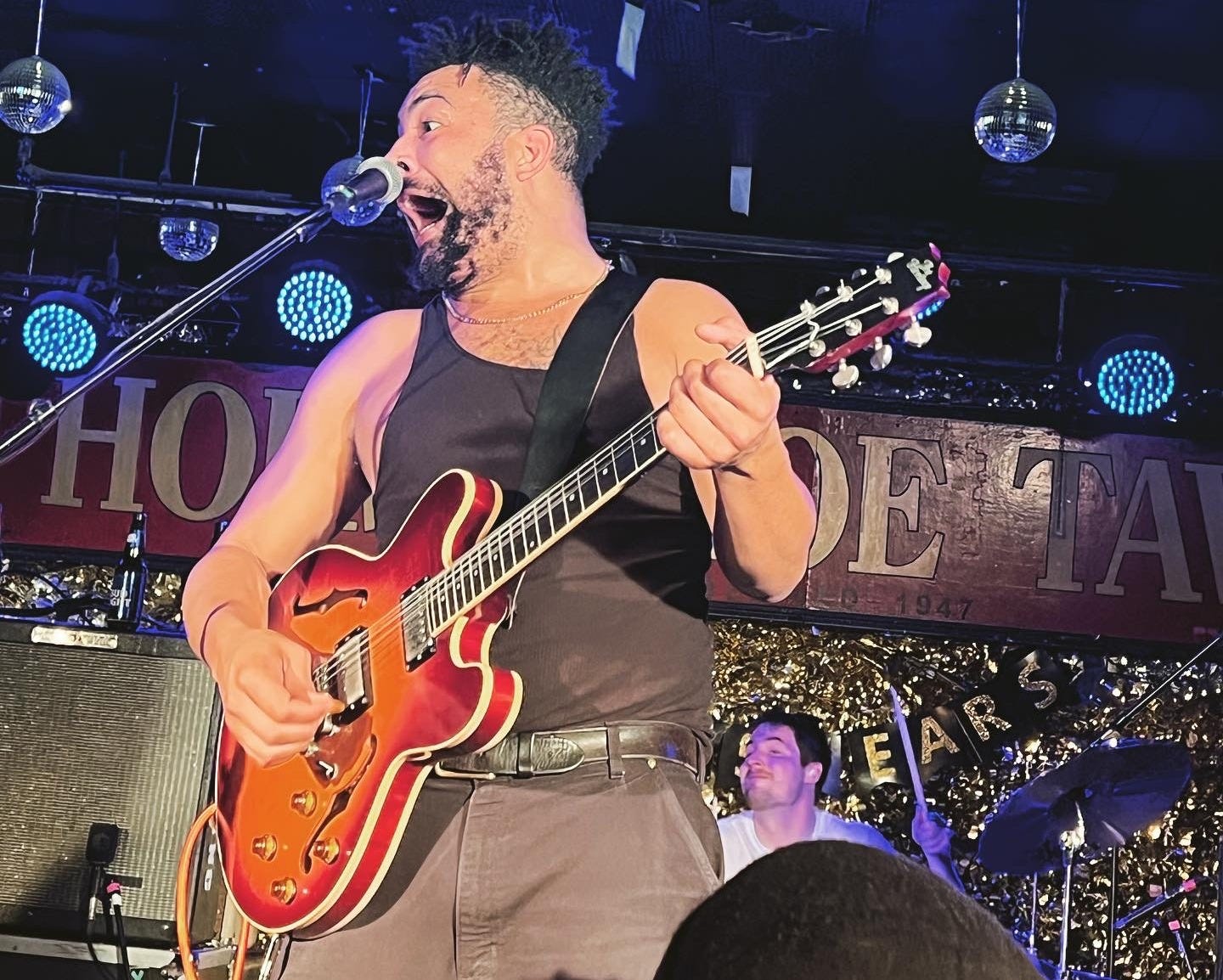
I was at a show a few months back — Dijon at HISTORY in Toronto, one of my favourite rooms in the city. The person standing next to me was talking to her friends, and said something that I haven’t stopped thinking about since.

“I paid $250 for this ticket. Face value was $75.”
They all shrugged their shoulders as if that was a pretty decent deal. No one was surprised. She didn’t say it with anger. She said it the way you talk about a parking ticket. Resigned. Expected. Like getting gouged on a concert ticket is just something you absorb now, like taxes or airline baggage fees.
That’s what bothers me the most… not the $250 ticket, but that we’ve all quietly agreed to accept it.
Live Nation and the Department of Justice announced a settlement in the landmark antitrust case that, for a brief, beautiful moment, threatened to break up the most powerful monopoly in the music industry. The DOJ accused Live Nation of abusing its control over venues, ticketing infrastructure, and artist routing to maintain a near-total monopoly on live music.
I've been thinking about that woman at the Dijon show all day. Because if you think today's news changes her story, I need to walk you through exactly why it doesn't.
DOJ vs. Live Nation: The Settlement
Here's what Live Nation agreed to: divest 13 amphitheaters, open parts of Ticketmaster's platform to competing ticketers like SeatGeek and StubHub, cap service fees at 15% at those venues, and pay $280 million to the 40 states that joined the lawsuit.
Live Nation’s stock is up 6% today. The market is celebrating. The cartel is fully intact.
Stephen Parker, executive director of the National Independent Venue Association (which represents thousands of independent concert spaces) put it plainly: “Live Nation’s reported settlement amount is the equivalent of four days of their 2025 revenue, which means they could potentially make it back by this Friday.”
Four days of revenue. That’s the price of a decade of monopoly, apparently.
Twenty-seven states, including New York and California, have already rejected the settlement and said they’re continuing to fight. New York AG Letitia James said the deal “fails to address the monopoly.” The judge who oversaw the trial told both parties their last-minute, mid-trial settlement showed “absolute disrespect for the court, the jury, and this entire process.” Live Nation’s own top lawyer had published a blog post urging the DOJ to settle the case - and then quietly deleted it days later. These are not the actions of a company that feels threatened.
Even if the DOJ had won everything they asked for, even if they’d forced the full Ticketmaster breakup — it still wouldn’t have fixed your ticket price. And that’s the part nobody is talking about today.
The 9:59AM Ritual
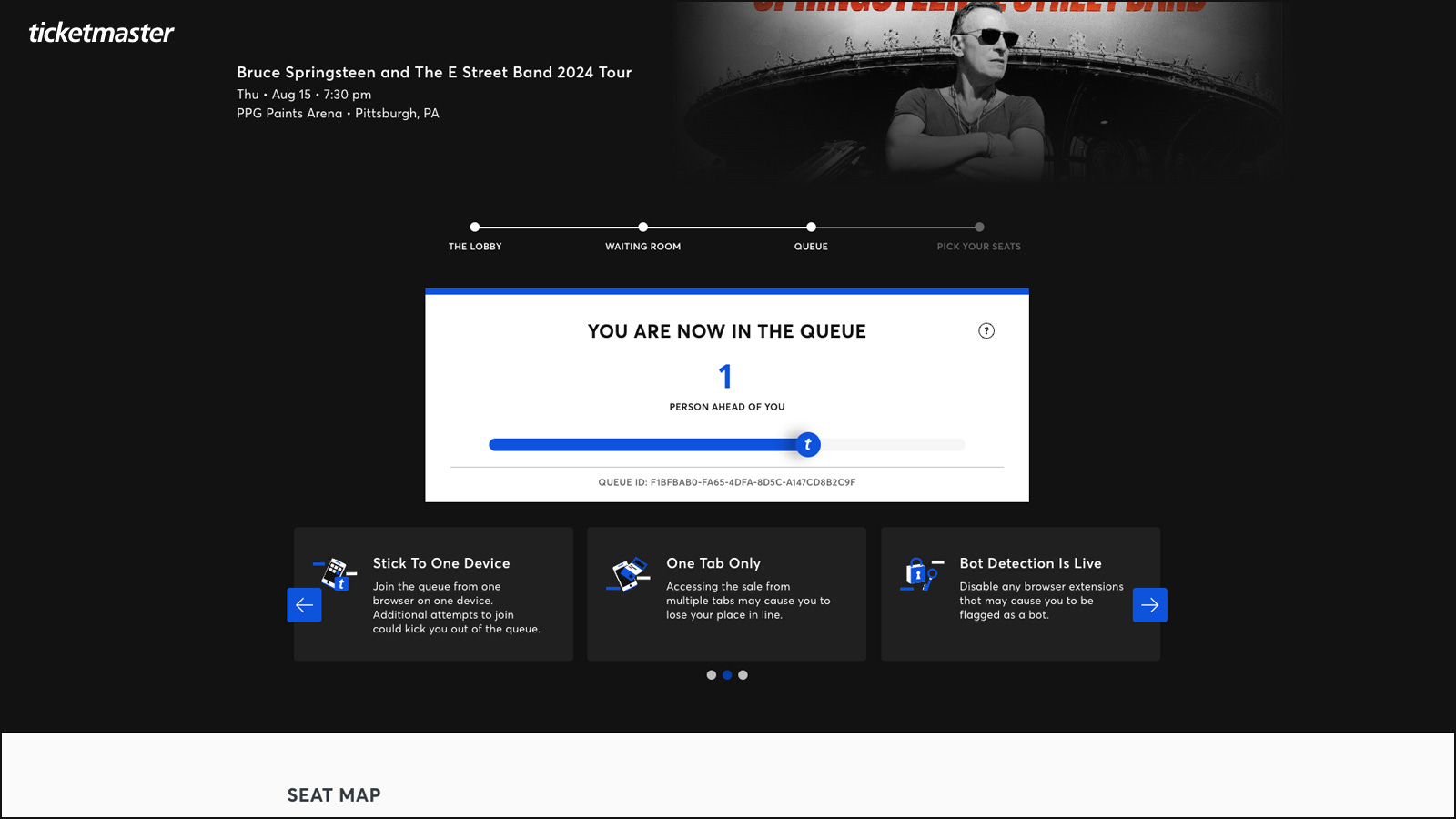
We’ve all lived this moment. It’s a Friday morning. Laptop open. Credit card on the desk. You’ve been refreshing the page for ten straight minutes.
10:00AM. You click.
Digital waiting room. Little blue loading bar.
10:04AM. Sold out.
Before the tab has even finished loading, you’re already on the secondary market. And there they are — hundreds of tickets for the exact same show, the exact same section. The tickets you were ready to pay $60 for are now $400.
The race was rigged before you even opened the browser.
Now let’s talk about what I’ll call The Double Dip. The most elegant and predatory revenue model the music industry has ever produced. And once you see it, the DOJ settlement starts to look a lot less like justice and a lot more like a photo op.
The Double Dip
In 2023, Live Nation (Ticketmaster’s parent company) reported $22.7 billion in revenue. Their ticketing segment alone cleared nearly $3 billion. The model is brutally simple.
When you buy a concert ticket, Ticketmaster charges you a service fee (roughly 27% on the primary sale) of about $16 on a $60 ticket. That’s Transaction #1. When a bot buys that same ticket and relists it at $400, Ticketmaster taxes the whole transaction again. Buyer fee of 20%, seller fee of 10% = another $120 out the door on a single resale.
They collect from the fan on the way in, then collect again when the scalper prints money on the way out. One ticket. Two bites. The artist collects exactly $0 of that $340 markup.
The DOJ’s new 15% fee cap sounds like progress until you read the fine print. It only applies to the select amphitheaters covered by the settlement. It touches nothing on the secondary market. The Double Dip is alive, untouched, and perfectly legal.
Meet Maya
Abstract math makes people’s eyes glaze over, so let’s make this real.
Maya is an indie artist who just announced a 100-capacity show in Brooklyn. She prices her tickets at $40 because she wants her real fans, the ones who’ve been there since her first SoundCloud demo, to actually be able to afford the room. The tickets go live, and by predicting the demand and profit potential of the show, the bots show up.
They sweep the inventory in seconds. Every ticket gets relisted at $150 within the hour. A few fans get lucky with the $40 tickets, but the bots buy, list and resell most of the tickets almost instantaneously.
By the end of the day, let’s look at who actually made money on Maya’s show. Ticketmaster collected $5,580 in combined primary and resale fees (27% on each primary ticket, 10% seller fee + 20% buyer fee on every resale). The scalpers pocketed $9,500 ($150 x 100 tickets minus $40 x 100 and 10% in seller fees). Maya takes home $4,000. The person who wrote the songs, built the fanbase, and sold the room made the least money in the entire chain. Not by accident. By design.
Simplified: For every $1.00 Maya earns, the platforms and parasites make $3.77 in pure profit.
Maya isn't playing a Live Nation amphitheater. The DOJ settlement doesn't touch her. The 15% fee cap doesn't apply to her show. The structural changes to venue contracts mean nothing for a 100-cap room in Brooklyn. For her, and for thousands of artists exactly like her, today's news changes absolutely nothing.
Sweet PR stunt, Live Nation.
The Free Market Myth
Here’s the argument that hardcore scalpers and resellers will reach for without fail:
“If I buy a pair of Nikes at retail and sell them to my friend for a profit, Nike doesn’t get a royalty. It’s a free market.”
I get it. On the surface, that’s logical. But shoes are a static product. Once they leave the store, Nike’s costs are finished. A concert ticket is access to enter a living, high-overhead ecosystem. A pair of Nikes doesn’t require a 50-person crew, a lighting rig, buses, sound engineers, and stagehands every time you take them out of the box.
When you buy shoes, the transaction ends. When you buy a concert ticket, the ecosystem behind it is just beginning to spend money.
And unlike a normal free market, which should theoretically drive prices down and improve efficiency, the ticket market is a rigged race. You’re competing against bots that can outclick a human being thousands of times per second. When a scalper flips a $60 ticket for $400, they aren’t participating in a market. They’re extracting value from a culture they contribute nothing to. If we’re going to allow a free market to exist in live music ticketing, the artist that is bearing all the risk should be getting a piece of that upside.
The DOJ settlement forces Ticketmaster to open its technology to rival platforms. That means more ticketing platforms. It does not mean fewer bots. It does not mean lower resale prices. It does not mean the artist sees even a dollar more.
“Just Lobby the Government”
I’m almost never the guy who says “we need legislation.” Big Tech will always outspend, outlast, and outlobby this battle. Ticketmaster and Live Nation have legal teams that could bankroll the entire independent music industry. They’ve successfully lobbied for the status quo because the status quo makes them billions.
Believe it or not, some governments have actually cracked this. The UK just passed legislation banning for-profit ticket resale entirely. Japan and Taiwan have enacted laws where scalpers face prison time and fines up to 50 times the ticket's face value. It’s not really a radical idea. The policy in these countries decided that culture was worth protecting. Not in North America.
Today's settlement is what critics are already calling "a token tap on the wrist." It doesn't break up the monopoly. It doesn't stop the Double Dip on the thousands of venues still under Ticketmaster's exclusive control. And it does absolutely nothing to address the bot networks that are the actual engine of the resale economy. Capping a service fee at 15% is a tidy headline that fools will cheer at. But it doesn't change a single line of code in the software that swept Maya's inventory in three seconds.
The problem is that while we wait for North American governments to grow a spine, scalpers are moving at the speed of software. Legislation moves at the speed of bureaucracy. So what do we do right now?
The Smart Ticket
The real exit is better technology. If you can’t fight them, build around them.
Forget the crypto hype and the NFT nonsense. I’m not talking about any of that. I’m talking about the rails that sit underneath a ticketing platform - infrastructure the fan never sees or thinks about. You still pay with your credit card. You still get a barcode on your phone. To you, nothing changes. But behind the scenes, everything does.
A Smart Ticket is a digital contract with rules written into its code — rules that no lobby, no settlement, and no bot network can override. Instead of issuing a static PDF, Maya’s tickets are minted as digital contracts. She doesn’t write a single line of code. She just toggles a few settings on her dashboard.
Two Ways to Kill the Scalpers
She has two options.
Option 1: The Hard Price Ceiling
The first is a Hard Price Ceiling - the system physically cannot process a resale transaction above $40. The bots scan the inventory, see a 0% profit margin, and disappear overnight. No legislation. No enforcement team. The math just doesn’t work for them anymore. Good riddance.
Option 2: The Secondary Royalty
The second option is what is called The Secondary Royalty. Maya decides she’s fine with a secondary market, but she wants a seat at the table. She allows resale at market price but encodes a 50% royalty on any secondary profit directly into the contract. It’s automatic. Instantaneous. Unavoidable.
Same 100 tickets. Same $150 resale price. Each resale generates $110 in profit — $55 goes to the reseller, $55 goes directly to Maya. Across the full run, that’s $5,500 in secondary royalties on top of the $4,000 in primary ticket sales. Maya walks away with $9,500. More than double what she made in the old system, without charging fans a single dollar more. The value creator is now a participant in the free market transaction. Built in code.
Platforms like YellowHeart, Seatlab, and UTIX are already building on this architecture. The Smart Ticket concept is already live and in operation.
Stop Building on Their Land
Today, Live Nation's lawyers shook hands with the DOJ. Their stock went up. Their CEO didn't go to prison. Ticketmaster still exists. The Double Dip still exists. The bots are already back at work.
The settlement is an eight-year agreement. Eight years of slightly more competition, slightly more fee transparency, in slightly more amphitheaters. Meanwhile, thousands of independent artists will play thousands of shows where none of those rules apply, and the scalpers will keep printing money off a culture they've never contributed a single thing to.
Artists have to stop waiting for the government to fix this. The legacy giants are never going to innovate their way out of a model that makes them billions - that's not how incumbents work. But here's what I know: you don't need them to. If you're an independent artist, a boutique promoter, a DIY venue, a manager who's sick of watching their client make the least money in their own ecosystem, you already have everything you need to make the switch.
Ticketmaster is not going to install a “Stop Robbing Artists” button on their platform. They’re a legacy monopoly built to extract fees and reward shareholders. Every bot flip, every resale surge, every $400 ticket — that’s the system working. There are billions of reasons to keep things exactly as they are.
You can kill the scalpers on your own tours. You can capture your own secondary market royalties. You can own your data, your price floor, and your fan relationship, all at once.
The DOJ spent two years trying to fix this from the top down. The technology to fix it from the bottom up already exists. Stop building your house on their land.
Great article. Just had an experience with a no-resale company in Pittsburgh at the Thunderbird - they allowed you to buy the tickets but would not deliver them until three days before the show, to prevent resale altogether. Loved this idea and want to support more venues (and artists of course) who opt to stop letting big business extract value for nothing.
Great article!
I’m not usually attracted to higher ticket shows, but this is so real and more reason for me not to go.
The best situation is to buy directly from the venue or the artist on their website or link or social media. Luckily the punk scene and smaller shows that I go to are still “living in the past” so much that it remains affordable. Small towns actually have it best.