

This is Part 1 of the Superfan Playbook that will teach you how to turn your audience into a real business. Most artists are sitting on a small group of fans who generate the majority of their revenue - and are building their entire career without ever reaching them.
The Number That Should Haunt You
2%
That’s the portion of your audience driving most of your revenue, and you don’t even know who they are.
Forget your monthly listener count, your follower numbers, and the view count on your last reel that you refreshed seventeen times.
Two percent of your total audience. These are the people who know every lyric, who stream your whole catalog when they’re sad. They drove three hours to see you play a city you’d never visited before. These are your superfans.
And for 99% of artists, they are completely invisible. Which means most artists are building an audience without ever building a business. A few hundred of the right people spending $5 to $25 a month is already more reliable than most streaming income. The problem isn’t scale, it is access.
Width Without Depth
According to Spotify’s official Fan Study, those 2% of people account for over 18% of your total monthly streams and 52% of merch purchases made through the platform.
A 2025 update to that research found the same segment accounts for 50% of ticket sales initiated through Spotify. A similar study in 2022 by MIDiA Research found that a similarly-sized superfan segment (roughly 1.9% of listeners) generated 42% of total artist revenue under SoundCloud’s Fan-Powered Royalties model.
Goldman Sachs put the total untapped superfan opportunity at $4.2 billion annually for the record industry alone.
Two percent of your audience. Half of your ticket sales. Over half your merch revenue. The math is pretty clear: Your career is not built on the masses. It’s built on the 2%.
The mass audience is a mirage made of light and smoke. A million strangers walking past your shop window without ever turning the handle. It is a metric of width without depth, a rented crowd that disperses the moment the weather turns. Chasing the masses is like trying to bottle the wind; it’s a lot of running for a very empty hand.
But the 2%? They are the gravity.
While the industry tries to sell you the ocean, you are actually looking for the salt. You don’t need a stadium of echoes; you need a room full of witnesses.
The $4.2 Billion Admission
This past month, Universal Music Group, the largest music company on the planet, posted a public breakdown of where they believe the industry is going. Their conclusion was blunt:
“Superfans are massively under-monetized, and the biggest growth opportunity in music right now is building ecosystems around the most engaged fans.”
UMG has built 1,600 direct-to-consumer artist stores. They recently struck deals with platforms like Stationhead and EVEN specifically to bring this infrastructure to their roster. CEO Lucian Grainge named superfan monetization the company’s primary strategic priority for 2026.
The case study they used to prove the point is worth sitting with.
An artist named LaRussell had earned $30,000 in total streaming revenue across nearly three years of releases. He then used EVEN to release his album directly to fans two weeks before it hit streaming platforms.
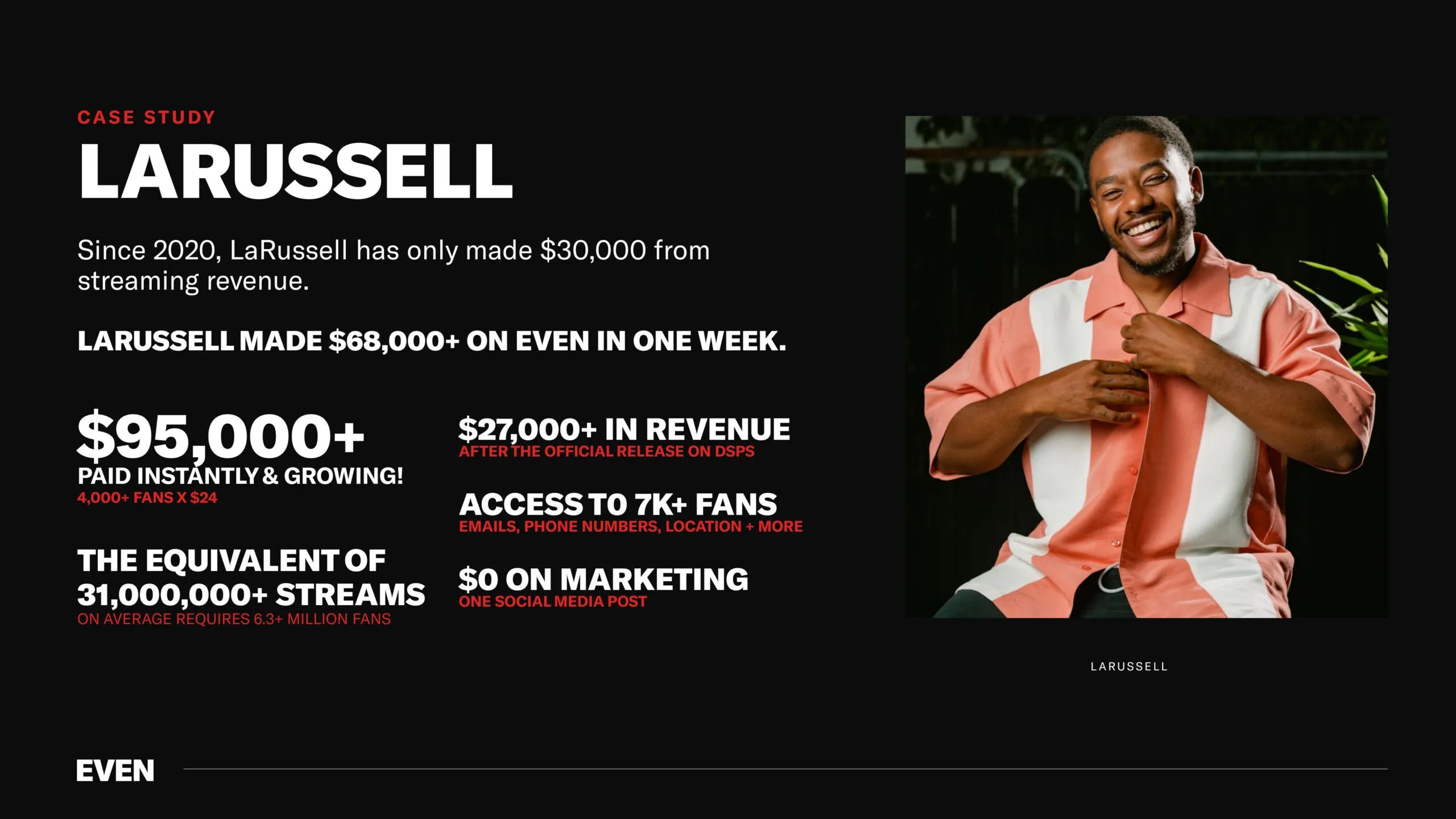
In his first month, he made $95,000 from just 4,000 fans. That’s an average of $24 per person. Not a huge ask. UMG’s own slides noted that to match that result through streaming alone, LaRussell would have needed over 30 million streams and at least 6 million listeners.
Instead, he did it with 4,000 people who actually gave a shit.
Guarded Like a State Secret
Unless you’re an artist on a major with unlimited funding, here is the part that matters for you: UMG is spending hundreds of millions building this infrastructure for their artists.
You do not need any of that. You do not need a major label deal, a D2C network, or a partnership with a platform that only serves artists with a budget behind them. The system in this guide costs under $1,000 to build, runs on tools that are free or cheap, and has already been proven at the independent level.
The problem is that most artists cannot find their superfans because nobody built them a way to. Not because the fans aren’t there. They’re out there, streaming right now, saving your songs, checking your page to see if you’ve announced a show. But Spotify isn’t going to hand you a contact list. Instagram gives you a “view count”, not a face or name. TikTok gives you “total likes” across all your videos - a number so meaningless it might as well be decorative.
Every platform that holds your most valuable audience data guards it like a state secret, because your fans are their product, not yours.
To take that power back, we have to stop optimizing for "reach" and start optimizing for "depth." But before we can build a system to find them, we have to agree on exactly what we’re looking for.
The Active Signal
A superfan is not just someone who streams your music a lot. A superfan is someone who organizes their life around it.
The clearest framework for why this matters came from Kevin Kelly in 2008. In his essay "1,000 True Fans," Kelly argued that any creator only needs 1,000 people willing to spend $100 a year on them to earn a living. That’s $100,000.
No label. No algorithm. No playlist placement. Just 1,000 people who actually care, and a direct line to reach them. Seventeen years later, the math is still right. It’s the infrastructure that’s been missing.
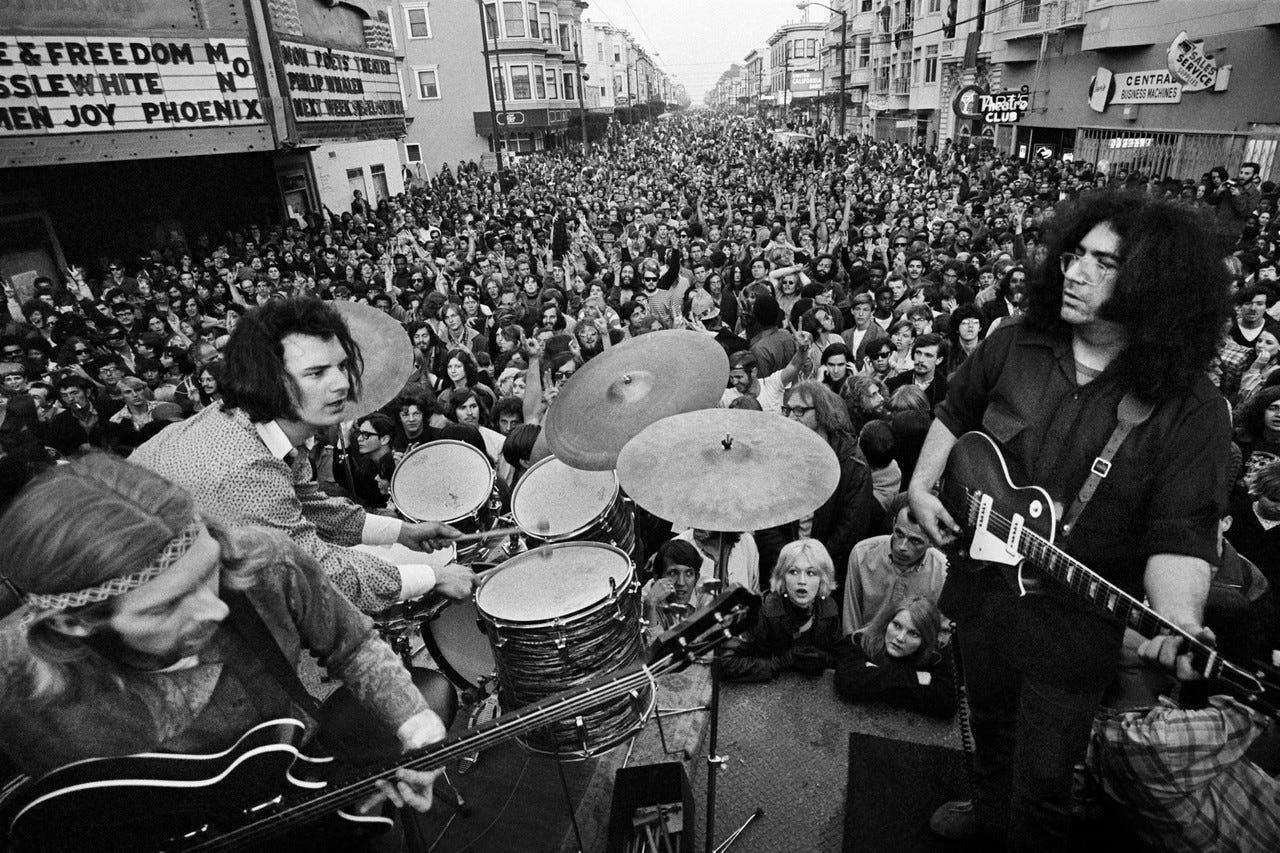
But the definition that matters most for this guide is behavioural, not academic. A superfan is someone who acts without being asked twice. They pre-save without a campaign pushing them. They buy a ticket the hour it goes on sale. They share your music because they want other people to hear it, not because you ran a contest. They reply to your emails. They are the signal inside all the noise.
The Human Corrective
Don’t you want to communicate with the people who resonate with your work the most? Don’t you want a direct line to the people who feel genuinely heard by what you make?
If you have a clear answer to this, you’ll remember this was never just about monetization. That is a human question. Social media promised us abundant connection and delivered something closer to the opposite. More communication than any generation in history, and more people feeling unseen than ever. Gatekeepers exploded visibility and quietly eliminated intimacy. You can have a million followers and feel like you are screaming into a void, because you kind of are.
Building a superfan community is about bringing that intimacy back. It is about knowing who your people are and actually talking to them. The revenue is real, but the reason this feels so urgent is that the music industry accidentally built a machine that connects artists to audiences at scale while making genuine connection almost impossible. This is the correction.
And none of this is new. Superfans have always existed. Before the internet, artists had physical mailing lists and fan clubs with newsletters. There were ways for the most devoted fans to go deeper, and there were ways for artists to reach them directly. What changed is not the existence of superfans—it is that digital platforms absorbed all of that infrastructure, made it invisible, and kept the data for themselves.
We are not inventing something new here. We are rebuilding something that used to exist before it got taken away. The industry knows this now. UMG’s entire 2026 strategy is built on it. The question is whether independent artists build the infrastructure to act on it before the major labels own every tool that makes it possible.
Floorboarding into the Fog
Before we talk solutions, we need to be honest about what is actually broken. There are three structural failures currently governing your career. They feed each other.
We have spent a decade mistaking motion for progress. We have been taught to drive at 100mph into a digital fog, staring at a speedometer that only measures how much we are giving away, never how much we are keeping.
You are floorboarding a car toward a destination that doesn’t exist. The monthly listener count is a high-speed chase on a treadmill; it feels like flight until the power goes out and you realize you haven’t moved an inch from the starting line. You are building a skyscraper on a sinkhole, decorating a luxury suite in a building that is already scheduled for demolition.
The tragedy of the modern artist isn’t that you’re failing. Instead it’s that you are succeeding at a game designed to leave you with nothing once the music stops. It’s an inevitable, high-speed collision with a reality that the industry has been hiding in the fine print: The faster you go, the less you own.
These are the three walls you are driving toward.
Wall One: Rented Relationships
Artists do not know who their top fans are because every platform with that information has a financial incentive to keep it.
Spotify knows your most loyal listeners - they literally built a product dashboard around it. But all that they’ll show you is a segment overview, not a contact list.
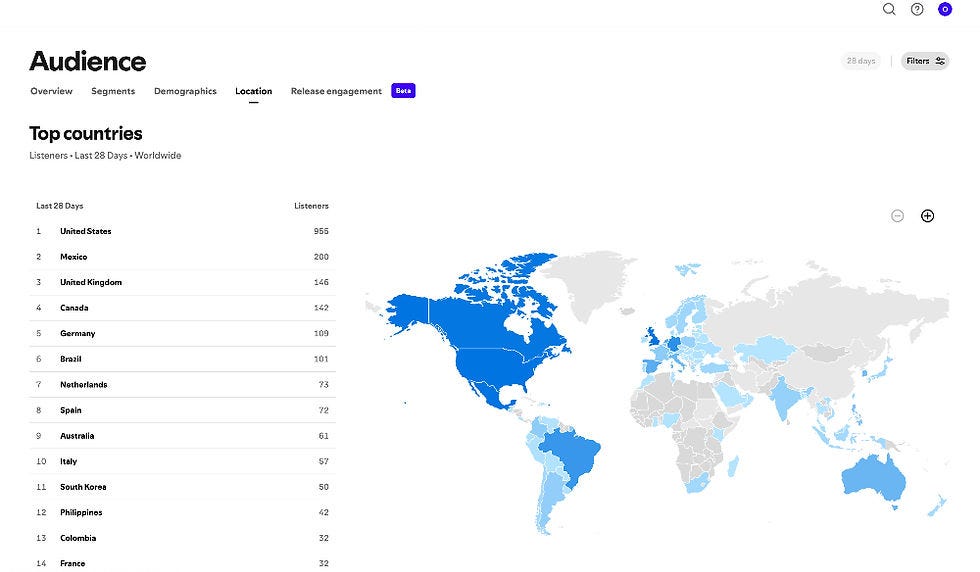
Instagram knows who watches every one of your Stories, but they use it to feed their algorithm and make advertising money. TikTok knows who saves your videos and comes back daily. Your label controls your merch buyer data. Your promoter controls your ticketing data.
If you told a Head of Growth at any e-commerce company that they had zero data on their 10,000 highest-value customers, they would genuinely lose their mind. Tell an artist manager the same thing about their streaming audience and they shrug.
That shrug is the most expensive habit in the history of the music industry. Your fans are not your fans until you own the relationship. Right now, they belong to the platform.
Wall Two: Burnout By Design
Here is something nobody in the industry says out loud: Artists are burning out. Not from making music. From being content creators. The expectation now is that you release music and simultaneously run a TikTok strategy, an Instagram presence, a YouTube channel, and a posting cadence that would exhaust a full media team. You are expected to be an artist, a director, an editor, a strategist, and a social media manager, every single day, indefinitely.
And the most brutal part? It is not even converting. Going viral does not make you money. A post with 200,000 views does not translate into 200,000 fans, or 200,000 streams, or even 200,000 people who will remember your name tomorrow. Followers are not fans. Followers are people who pressed a button once. The algorithm rewards novelty over depth, reach over loyalty. It gives you bullshit metrics in exchange for your mental health.
And at the end of all of it, you still do not know a single name or email address from anyone who watched.
Wall Three: The Broken Exchange
Fans want to support artists. They genuinely do. The problem is that nobody has built them a meaningful way to do it.
Think about what we have lost. Twenty years ago, a superfan could walk into a record store and spend $25 on an album. They could buy the deluxe edition, the vinyl, the box set. That purchase felt like something - a physical object, a statement of identity, a direct exchange between fan and artist.
Streaming replaced that with a flat monthly subscription fee that pays the artist a fraction of a cent per play. The connection between fan spending and artist income has been almost entirely severed. Artists are receiving fractions of pennies while fans pay $12 a month for “the utility.”
What is left? Merch, but a real fan is not buying the same hoodie twice. A ticket, but only when the artist plays their city, which might be once every two years.
The options are thin and infrequent, and they require the fan to find their way to the purchase rather than the other way around.
Selling 500,000 records used to make you a genuinely good living. Now, 500,000 monthly listeners will not pay your rent. 500k streams is a number that sounds impressive at a dinner party and means almost nothing financially. We eliminated the main mechanism through which fans could support artists and replaced it with a system that calls fractions of a cent "progress."
The Exit Strategy
When artists actually give their fans a direct way to spend money, the data shows those fans were ready the whole time.
Music industry consultant Curtiss King released a project through EVEN and made the equivalent of over one million Spotify streams worth of revenue from just 135 people in two weeks. Not a million fans. One hundred and thirty-five.
Luminate’s 2024 Year-End Report found that direct-to-consumer sales made up 63% of first-week physical album sales among the US Top 200. Bandcamp Fridays have generated over $154 million for artists since 2020.
If you are worried that building a superfan funnel means extracting money from people who love you - stop.
You are not exploiting your fans. You are finally giving them a way to support you that they never had. Your superfans are already out there wanting to go further. They just have nowhere to go.
This is the door.
—
Next Tuesday | Part 2: From Philosophy to Engineering
This week was just the diagnosis. This is the point most artists stop. They understand the problem - and then go right back to chasing numbers.
Part 2 is where you actually build it. It is the tactical map for making a living as an artist by owning your own machine. While the first part of this series was about the "Why," the remainder of the guide is reserved for the community of artists, managers, and marketers who have joined our circle of paid subscribers.
We are moving from the philosophy of the industry into the actual engineering of a career:
The Capture: How to strip the mask off the audience and build a customer list you own forever.
The Anatomy of the 2%. Mapping the behavioral signals that separate the passive drifter from the person ready to spend $100 today.
The Monetization Logic. Flipping the switch from capture to cash flow without losing the soul of the work.
The major labels are spending millions to build a cage around this strategy. You can build the bridge for the price of a vinyl record.
Part 2 and Part 3 are reserved for paid subscribers. That’s where we build the system.
You can find Part 2 here.
Thank you for so eloquently articulating what I’ve been trying to stress to my artists. The gamification of Spotify blurred the objective for so many artists (and to be fair, managers. I definitely fell for it for a while). Thanks for the thoughtful piece
This is the outgrowth of Enshittification. If a platform is not giving you the direct connection lines to a fan (email address), you become a slave to the platform. Concessions Spotify et al makes are useless in the face of that. This is the ONLY reason I'm on Substack (I can write anywhere), and the reason you can get more of what I do on Bandcamp than anywhere else. At the moment, all other platforms are essentially valueless because they gatekeep the superfans.
I guess not everyone knows this yet? Either way, it bears repeating.