

In the last three parts of the Superfan Playbook, we covered the importance of knowing who your fans are, a case study to show why it works, and some of the strategies to narrow down who your actual OGs are.
Before we dive deeper into which platforms to use and where they fit in your funnel, I thought that it would be important to understand why most artist communities end up dying within six months from opening the gate. It’s not because of bad luck or platform fatigue. It’s because fatal mistakes were baked into the methodology before anyone even clicked “Join.”
Truth is, every community platform comes with a cost. Sometimes it’s monetary, but more importantly, it’s a time commitment. Deciding to invest money and time on community infrastructure will not save a space that was structurally doomed at launch.
This piece will break down the audit you should run before opening any doors, and I’ve broken down the mistakes split into two phases: what you do before the doors open, and what you do after.
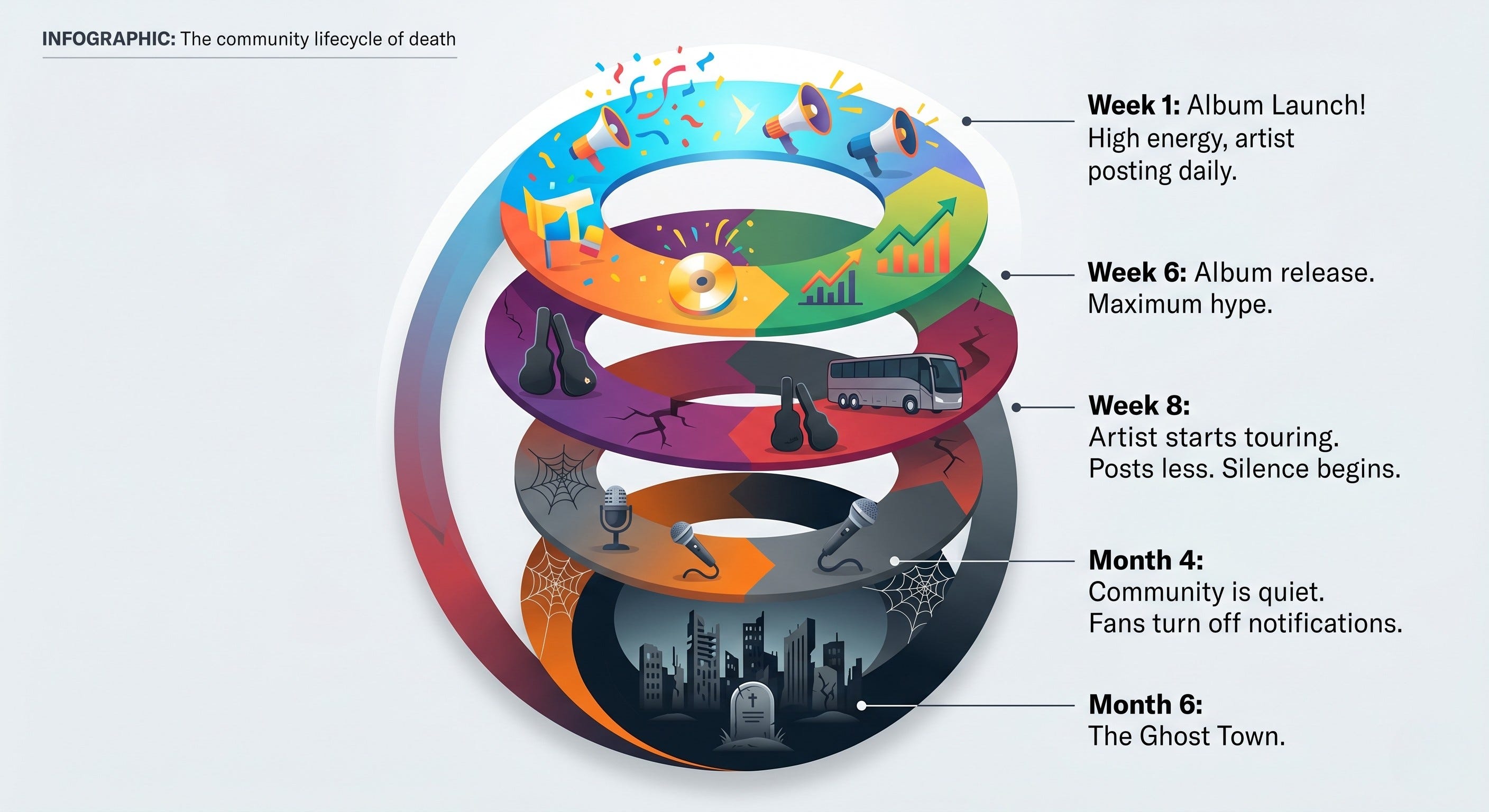
Phase 1: Before You Open The Floodgates
Don’t Launch to An Empty Room
A community of ten people is essentially a group chat with delusional hope. The metric that matters is critical mass. A space needs enough members so that a post gets a reply within a reasonable window of time. Below that threshold, every silence reads as a confirmation that nothing is happening here.
Your benchmark should be fifty to a hundred highly engaged fans seeded at launch, at the bare minimum. If you can’t pull that from your captured list, you’re not ready to open. The Capture phase exists for this exact reason. Launching prematurely and watching it feel empty is worse than not launching at all. First impressions in a community are permanent, and even your deepest fans need to feel the momentum.
Don’t Open If You Have Nothing to Share
Ok- you launched the Discord. Now what? Most artists realize three weeks in that there was no exclusive content pipeline behind the front door. No demos queued. No recording process footage recorded. No actual reason for anyone to want to keep showing up.
Build the content runway before you build the room. I’d recommend anywhere from sixty to ninety days of exclusive material mapped out ahead of time. This can be voice memos, rough demos, behind-the-scenes footage, or decisions that you’ll allow your fans to weigh in on. A community is a content commitment with a lot more steps than a social media page. This doesn’t mean you need something to offer every single day, but you must have a cadence consistent enough to keep the room hot.
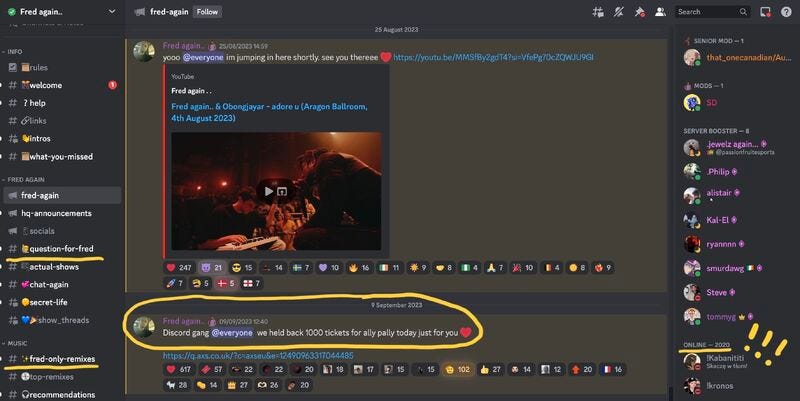
Don’t Pick The Platform Before You Understand Your Fans
Don’t choose Discord just because it has a good UI. Don’t use Substack chat just because that’s where you’re already posting. Don’t open a Telegram channel because your coworker’s buddy uses it for crypto trading. Demographic fit eats platform features every single time.
A 50-year-old jazz fan is not going to drop everything they’re doing to learn Discord’s interface. A Gen Z internet native isn’t going to check a WhatsApp broadcast group for community announcements. The right platform for the wrong audience is the wrong platform. Pick the room your fans already live in, not the one you wish they did.
Phase 2: Once The Doors Are Open
The Community Is Not Just A Campaign
This one kills more communities than any other mistake on the list.
The other half of this piece is for paid subscribers. You’re reading Part 4 of The Superfan Playbook: the ongoing series on how to find, hold, and monetize the fans who actually drive an artist’s career.
Paid subscribers get full access to this piece, the complete archive of Parts 1–3, and every installment as the series continues.