

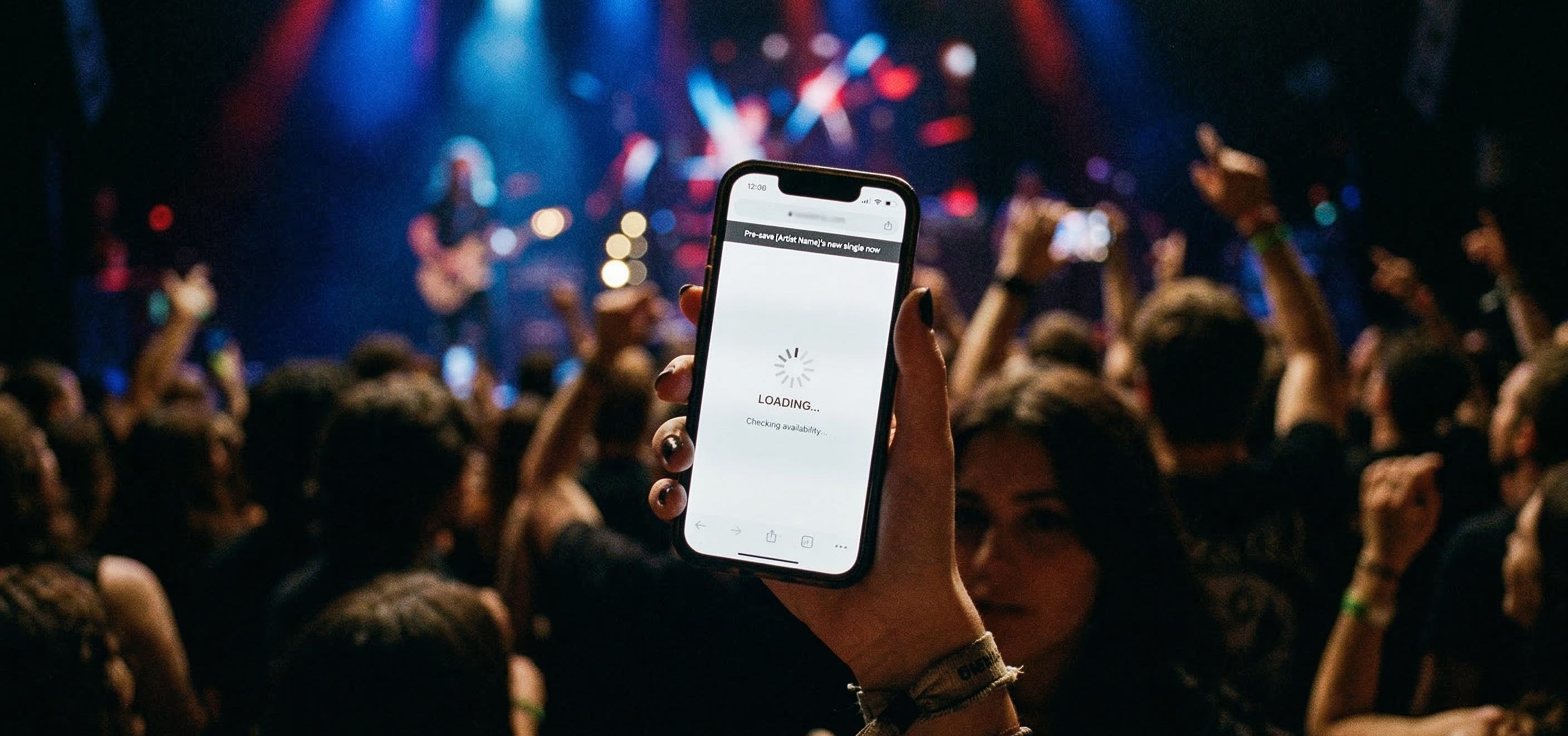
There’s a moment that happens in every artist meeting, usually about three weeks before a release date, where someone at the table; a manager, a label rep, a well-meaning marketing coordinator - says the words: “We should launch the pre-save campaign.”
Everyone nods. It goes on the rollout doc. A link gets built. A graphic gets designed. The caption writes itself: “Pre-save my new single! It drops on X date and your support means everything to me.”
And then almost nothing happens.
Not because the artist doesn’t have fans. Not because the song isn’t good. But because nobody.. not the manager, not the label, not the marketing coordinator - stopped to ask the only question that actually matters: why would a normal person want to do this?
The Industry Mask: Data Extraction in a Fan Costume
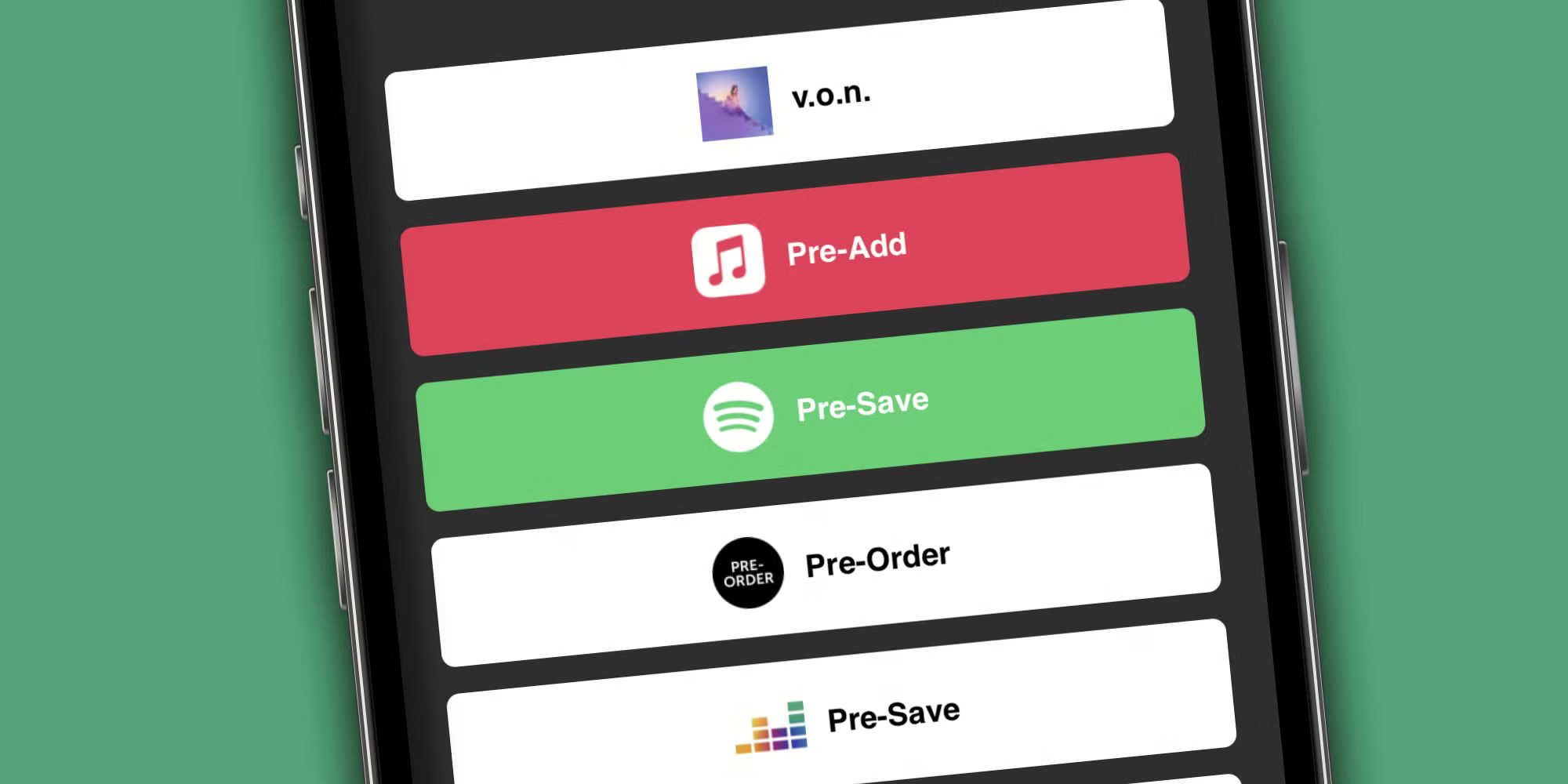
The pre-save, as it exists in most release campaigns right now, is an industry-facing tool wearing a fan-facing costume. Strip the language down to its honest form and you get this: "Click this link so that on release day, my song gets automatically added to your Spotify library; which helps trigger the algorithm and boosts my first-week numbers." That’s literally what you’re asking. Compare this to any other type of online business and the average consumer will look at you like you have three heads.
You’re recruiting your fans into unpaid labor for a machine that doesn’t know their name. You’re asking them to care about a metric they’ve never heard of, for a song they haven’t heard yet, so you can impress a platform that pays you a third of a cent per stream. And you’re framing it as an act of love. If “support me” is your best pitch to get an email, you don’t belong in this business.
By doing this, you’re not creating a moment of connection. You’re dressing up data extraction as an act of patronage. Honestly, it’s pretty awkward, and fans can feel the difference.
The Hollow Audience Epidemic
Here’s the number that should haunt every manager running these campaigns: artists with 500,000 monthly listeners regularly pull eight to ten pre-savers.
Not eight hundred. Not eighty. Eight.
Let’s be clear - that number is not a marketing failure. It’s a design failure. The campaign was never built for the fan. It was built for the rollout doc. Of course they didn’t show up - there was nothing in it for them.
On average, only 1% to 2% of monthly listeners on Spotify are actually “active” fans. The monthly listener metric is a massive, inflated number that suggests a scale that isn’t actually there. They’re people who heard your song in a “Lofi Beats” playlist but couldn’t pick your face out of a lineup. They’re not a community. They’re not yours.
The pre-save gap is just further proof that this is the most dangerous inflated metric in the business. It’s a ghost town with a high population count.
The Pivot: Focus on your data
What gets lost in all of this is what a pre-save campaign could be; because the mechanic itself isn’t the problem. The problem is what artists are doing with it.
A fan who clicks that link is already warm. They followed you somewhere, saw the announcement, felt something pull them toward that button. That is a rare, valuable moment of genuine intent. It happens in a window. And most artists spend that window asking for a favour instead of building a bridge.
What you’re actually sitting on is a data capture opportunity.
Spotify can change the algorithm tomorrow. They can pull your song from a playlist, lower your royalty rate, or sunset a feature you built your whole campaign around. What they can never do is touch your email list. Every address you collect in that pre-save window is a direct line to a real person who raised their hand and said “I’m paying attention.” That is worth infinitely more than a first-week streams bump that evaporates in forty-eight hours.
This is where the model breaks open. A drop notification delivered via SMS or email isn’t a billboard on a highway they might drive past. It’s a text they actually open. Direct communication (when it’s earned) converts at a rate that makes social posting look like shouting into a void. But the channel is only half the equation. The question is what you’re willing to give them in exchange for access to it. This is where most campaigns go completely silent, and it’s the part that needs to change.
The Value Exchange: Building Citizenship
There is a massive, uncomfortable gap between what artists ask fans to do and what they give fans in return. “Support me” is not a value exchange. “Pre-save this so I can game the algorithm” is not a value exchange. Fans are not NPCs in your release strategy. They are people; and people respond to being seen, rewarded, and let inside something.
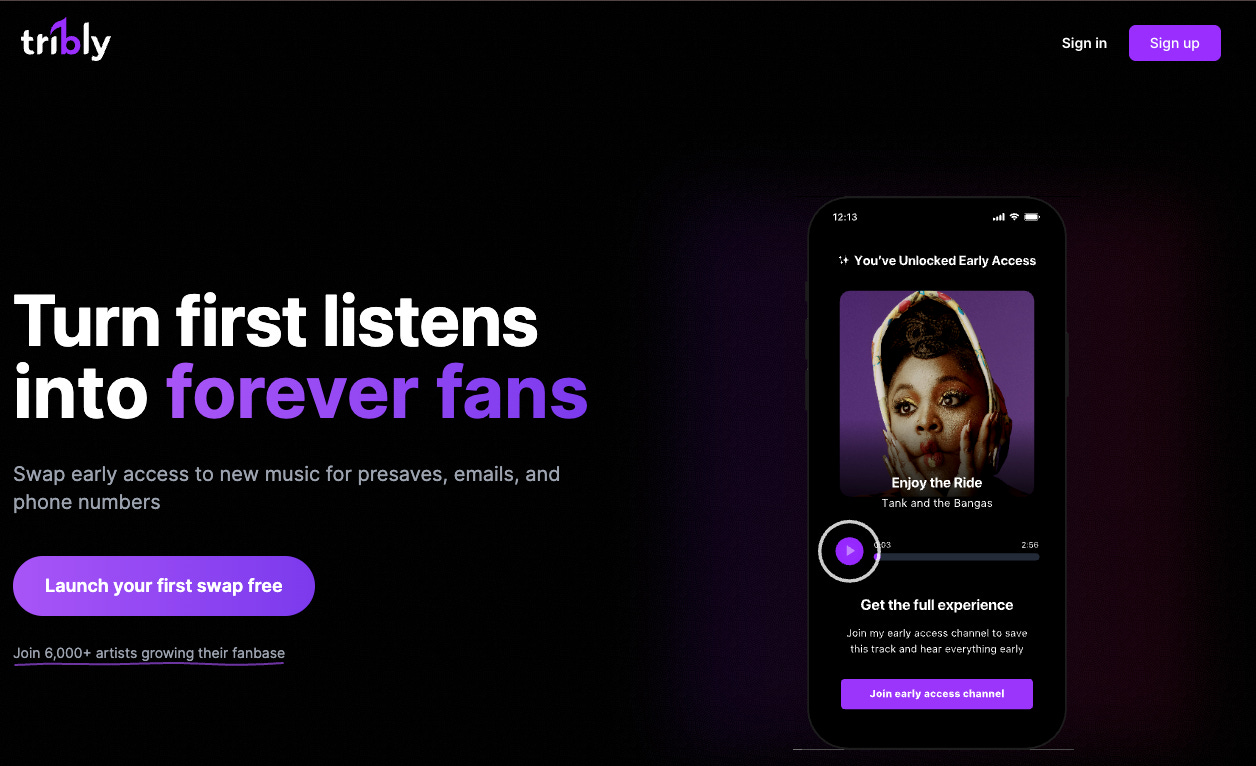
The campaigns that are actually closing this gap share a common architecture: the sign-up triggers something real. The moment a fan completes the action, they receive a thirty-second clip of the song weeks before the rest of the world hears it. A personal video. First access to tour ticket windows when routing gets announced. Exclusive merch drops. Voting rights on creative decisions: artwork, setlists, music video concepts. A gated space that makes them feel like they arrived somewhere the general public hasn’t.
The tactics are almost secondary. The philosophy is the thing. You’re not asking them to help you anymore. You’re offering them early citizenship in something real. The pre-save stops being a request and becomes an invitation, and those are two completely different relationships.
Help Them Help You
The fans who sign up for a pre-save built this way are not gaming an algorithm. They’re investing in an artist they believe in. And that investment compounds. They’re at the show in six months. They’re buying the hoodie. They’re dragging three friends to the listening party. They remember that you let them in before anyone else, that you treated them like a person and not a conversion event.
The real first-week number should strictly look at this: how many people did you actually let in?
Design the campaign for the fan first and the algorithm second, or don’t design it at all. Because a pre-save that asks for everything and offers nothing isn’t a marketing tactic. It’s a transaction that tells your audience exactly how you see them.
Most artists won’t change this. They’ll keep building for the rollout doc, keep measuring the wrong things, keep wondering why the numbers feel hollow even when they’re big.
The ones who figure it out will have something the algorithm can’t replicate: a real audience. Not just listeners. Not just monthly actives. People who showed up because you gave them a reason to.
At this point, Spotify’s UX is so broken, I use pre-saves as a way to bookmark an upcoming release. I usually completely forget about the save until it pops up on the home screen, and “hey, let me check this out”.
I just don’t know how musicians navigate this world. My usage definitely doesn’t signal much other than I *might* check it out later.
Yall aren’t gonna believe this but I’m 65 and when i was in high school the DJ at WKLS Atlanta would mention the release date for the new Zeppelin or Bowie and then we would wait until that day, buy the album with our lawn-mowing money, then go to Lee’s house (his dad was a surgeon and he had a righteous stereo), drop the needle on the vinyl, and listen to the entire thing. Just 2-4 teenaged boys sitting in Lee’s bedroom simply listening to music, with discussion to follow.
Sometimes, if Lee’s parents weren’t home, he’d steal a couple of his moms cigarettes that we would pass around like joints during our listening sessions.