

Over the last two weeks, we’ve witnessed a massive shift in the internet’s infrastructure. People have officially had enough of the slop in their feeds.
Before this month, we watched our LinkedIn feeds transform into a cesspool of AI-generated garbage.1 Meanwhile, Spotify was getting flooded with entirely synthetic music (some of which they made themselves… convo for another time). Even here on Substack, the purist of social media platforms, we saw a huge influx of AI-generated essays by machine-run publications. The good news is that this is coming to an end.
A decade from now, we’re going to look at 2022 to 2026 as the Wild West of AI.
But with uncontrolled chaos, comes the inevitable arrival of the sheriff. Because without rules and regulations we are no different from wild animals.
As I watch this chaos unfold, I look back on the last hundred years of the music business. There is an incredibly predictable, century-old pattern of how the music industry handles disruption. Technology will advance quickly and use creative work without asking for permission, the industry will scream about it and kick up dust, and then legal infrastructure will evolve and adapt.
History repeats itself, and we’ve run this exact play three times in the last century.
The Radio Era: 1910s to 1920s
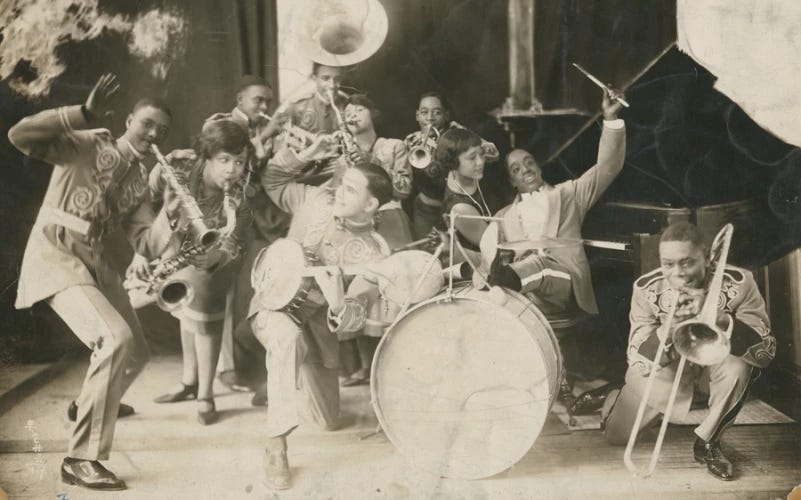
Radio was the original Wild West in music. “Pay to Play” never existed. Broadcasters would play songs with zero compensation to the writers or artists. Restaurants would hire musicians to play the most popular compositions, and then soften the blow by offering its creator the entire industry’s least favourite E word: exposure.
The result was the creation of ASCAP, PRS, and eventually SOCAN — organizations that were built for collecting royalties and distributing the money back to the creator. The argument was definitively settled in 1917 by Justice Oliver Wendell Holmes with eleven famous words that would shape music history forever:
“If music did not pay, it would be given up.” 2
The Sampling Era: 1970s to 1980s
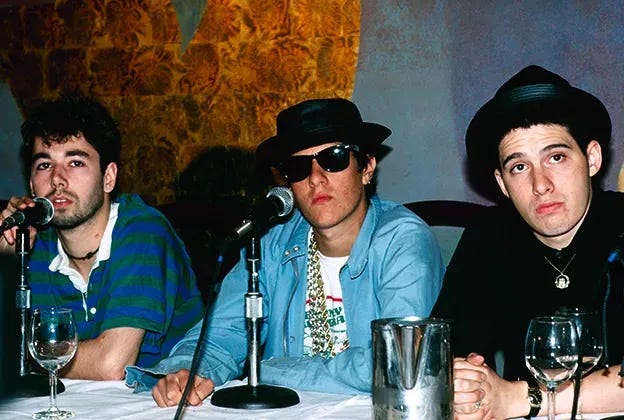
Early hip-hop was fundamentally built from treating existing records as free, raw material to be chopped, spun and mixed into original music. DJs spun and scratched vinyl, mixing rock, soul and a handful of other genres, while MCs would rap over top of it. This is what made hip-hop so special. The Beastie Boys dropped Paul’s Boutique in 1989, which stacked somewhere between 100 and 300 uncleared samples on a single album.3 Years later, this would became a case study for the future of music licensing.
But before the precedent was set, the hammer came down. In 1991, Biz Markie was sued in federal court for sampling Gilbert O’Sullivan’s “Alone Again (Naturally)” after asking for clearance, being told no, and using it anyway.4 The judge opened the ruling by saying “Thou shalt not steal,” and looked at the case for criminal prosecution under the same jurisdiction as theft.
By the next morning, clearing samples became a mandatory piece of infrastructure in music, and the entire industry was forced to adapt.
The Piracy Era: 1999 to 2000s
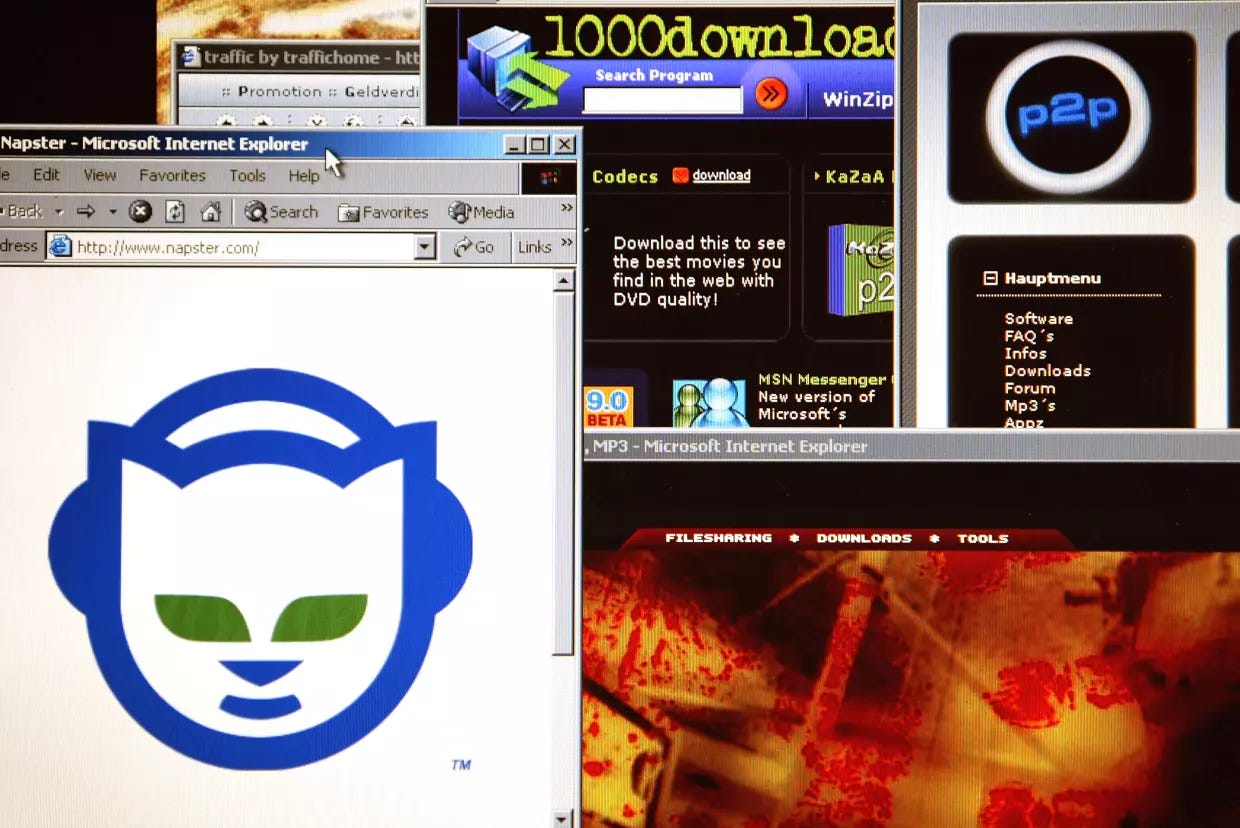
In 1999, Napster was born. They gained 80 million users almost overnight5, and created a public uproar from the music industry. The major labels sued Napster into the depths of hell, and within a few years, Steve Jobs personally convinced every major label to license their catalogs to a paid version that he called iTunes. Spotify eventually emerged as the fully licensed butterfly that still dominates the music consumption market today.
The AI Era: We Are Here

Enter the biggest disruption of the 21st century. Far bigger than music.
In the last few weeks:
July 22nd: Substack partners with Pangram, an AI detection tool, to tell readers which essays were AI-generated, and to what extent.6
July 30th: LinkedIn added a button that lets users flag “This looks like AI slop” allowing humans to de-value the content out of their feeds.
August 2nd: The European Union’s AI Act comes into force, requiring AI companies to mark their output in machine-readable ways. Anthropic responds by embedding an invisible watermark into every sentence Claude writes, worldwide — though no public tool can detect it yet, which is a story of its own.7
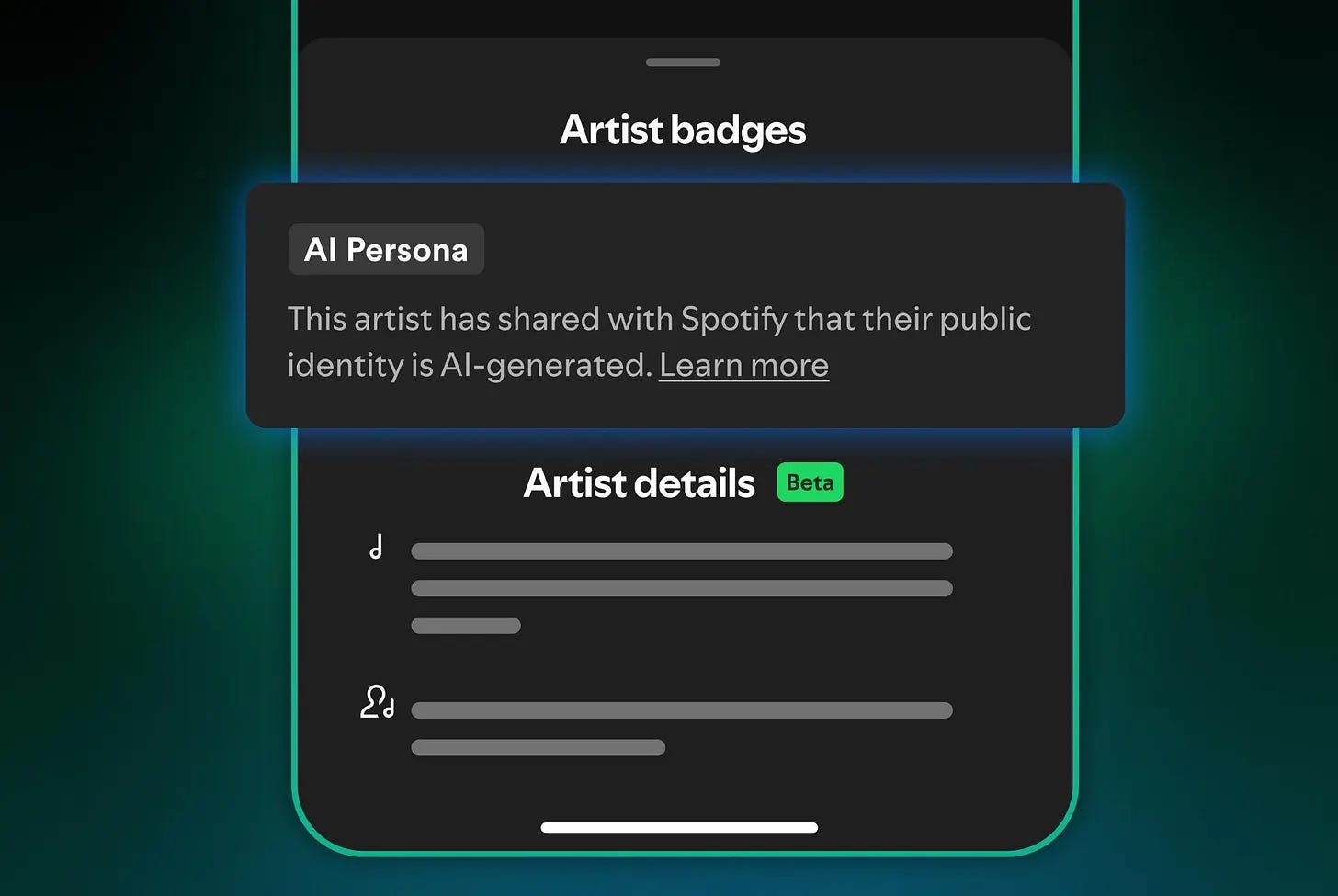
August 11th: Spotify announces the “AI Persona” badge that labels AI-generated artists, keeping them out of algorithmic recommendations unless a listener deliberately follows them.
August 12th: BMG announces a massive licensing deal with Suno — the AI company that Universal and Sony are still suing — becoming the second major rightsholder to sign, nine months after Warner Music. 8
So what now? We’re watching the Wild West of AI disintegrate right in front of our eyes, and I look back on the exact same trends that we’ve seen in the past century.
Look at the patterns. What we’re seeing is: detection, detection, detection, detection, license.
Parking is always free until the meter is installed on the sidewalk.
Two Layers, One Beast
As the infrastructure is built, there’s two different layers that feed the same beast. And they will both eventually put money into artists pockets.
The first is Input Licensing. This is where the checks are already being written. If you wrote the song, you would get paid because the AI model was trained on your creation. The BMG x Suno deal gets Suno off the hook for stealing copyrights, and covers them for future use of it at a cost. This probably comes with a fat pay cheque or equity in Suno. I’d put my money on a bit of both. My prediction is that UMG and Sony aren’t far behind — in this industry, “still suing” has never meant “we refuse on principle.” It means “we’re negotiating the price.” (Side note: this feels strikingly similar to the settlements the majors reached with Spotify in the early days of streaming — see: The Piracy Era section above...)
The second is Output Provenance. This is what happens when the AI creates something new after being fed the music that you created. It’s the proof that the machine made the thing — which is what makes licensed use enforceable and unlicensed use provable. The first step of this is the Anthropic watermark, the Spotify AI badge, or the LinkedIn slop button. To be fairly licensed, it’s important that it’s identified in the first place.
What About the Little Guy?
BMG and Warner getting compensation for their artists is definitely a step in the right direction. But the obvious concern I have is: who is fighting for the independent artist whose life’s work was scraped into the meat grinder we call AI?
In 2018, the Music Modernization Act created a beautiful little thing called the MLC: the Mechanical Licensing Collective9. It’s a public database that’s legally mandated to collect royalties and pay songwriters. I’ve spent the past couple of years filing claims through the MLC for the artists I work with. It’s a bit clunky but it works.
The AI licensing model needs an organization like this. Suno can grease the palms of the major labels all they want but a public registry is what a true democratic future of music requires. You should be able to allow or deny your music being used to feed models, and if you decide on the former you should be compensated for it in the event of both layers that I stated above.
The First Domino
Though this all feels like a dystopian fantasy, it’s already happening in different mediums.
Last month we saw a federal court approving a $1.5 billion settlement between Anthropic and the copyright owners of the books they used to train Claude.10 On average, each owner was paid out $3,000 and the lawsuit covered nearly half a million books. It was the largest copyright recovery case in history.
Another lesson to learn from history: the settlement only covered books that were registered with the US Copyright Office. The authors in that database made their money, and everyone else got left behind.
Music will follow, quickly and all at once. UMG and Sony Music’s trials against Suno are coming up, and indie musicians are working on class action lawsuits. If we can learn one thing from the book class action, it’ll be the same song and dance: a claims window opens, a works list gets built, and an administrator starts matching money to registrations.
It’s important to understand that the only artists who get paid will be the ones who are actually findable. Don’t get it twisted: registering with your PRO and the MLC is not actually copyright registration (at least in the USA). They are simply just royalty databases. The authors who collected $3,000 a title were the ones registered with the US Copyright Office. This is what will make you actually visible to an American claims administrator, which is where the AI lawsuits will live.
The Organic Sticker
Every piece of technology that shook up the music industry eventually got dragged back to the front door to pay cover. AI is no exception.
This is the best news for artists and human creators that we’ve seen in a long time. A friend of mine once joked about how the “Verified Human” badge will be in the same stroke as the organic sticker at the grocery store. Same apple, different creation process, twice the price and triple the demand. That is exactly where this is going. In a watermarked world, proof that a person put sweat, blood, and tears into a record is priceless.
The parking meters are being installed down the street. Make sure one of them has your name on it.
“If music did not pay, it would be given up.” It paid and it will pay again.
https://www.ndtv.com/artificial-intelligence/almost-half-of-all-linkedin-posts-are-now-ai-written-pangram-labs-research-shows-11764822
https://supreme.justia.com/cases/federal/us/242/591/
https://www.thevinylfactory.com/features/beastie-boys-pauls-boutique-samples
https://dailykemp.com/2021/11/25/the-death-of-sampling/
https://en.wikipedia.org/wiki/Napster
https://www.pangram.com/
https://globalnews.ca/news/12018450/ai-anthropic-claude-watermark-text/
https://www.billboard.com/pro/suno-bmg-licensing-deal-ai-music-use/
https://www.themlc.com/
https://www.reuters.com/world/us-judge-approves-anthropics-15-billion-settlement-copyright-lawsuit-2026-07-20/
“Sing for your supper, and you'll get breakfast
Songbirds always eat
If their song is sweet to hear…” Rogers&Heart ⭐️🙏
Just out of curiosity, did you choose that “you wouldn’t steal a car” graphic or was that auto generated? As someone who still watches DVDS, it’s triggering. 🤣😂🤣